Google is testing AI ad copy. Your feed is still yours to write.
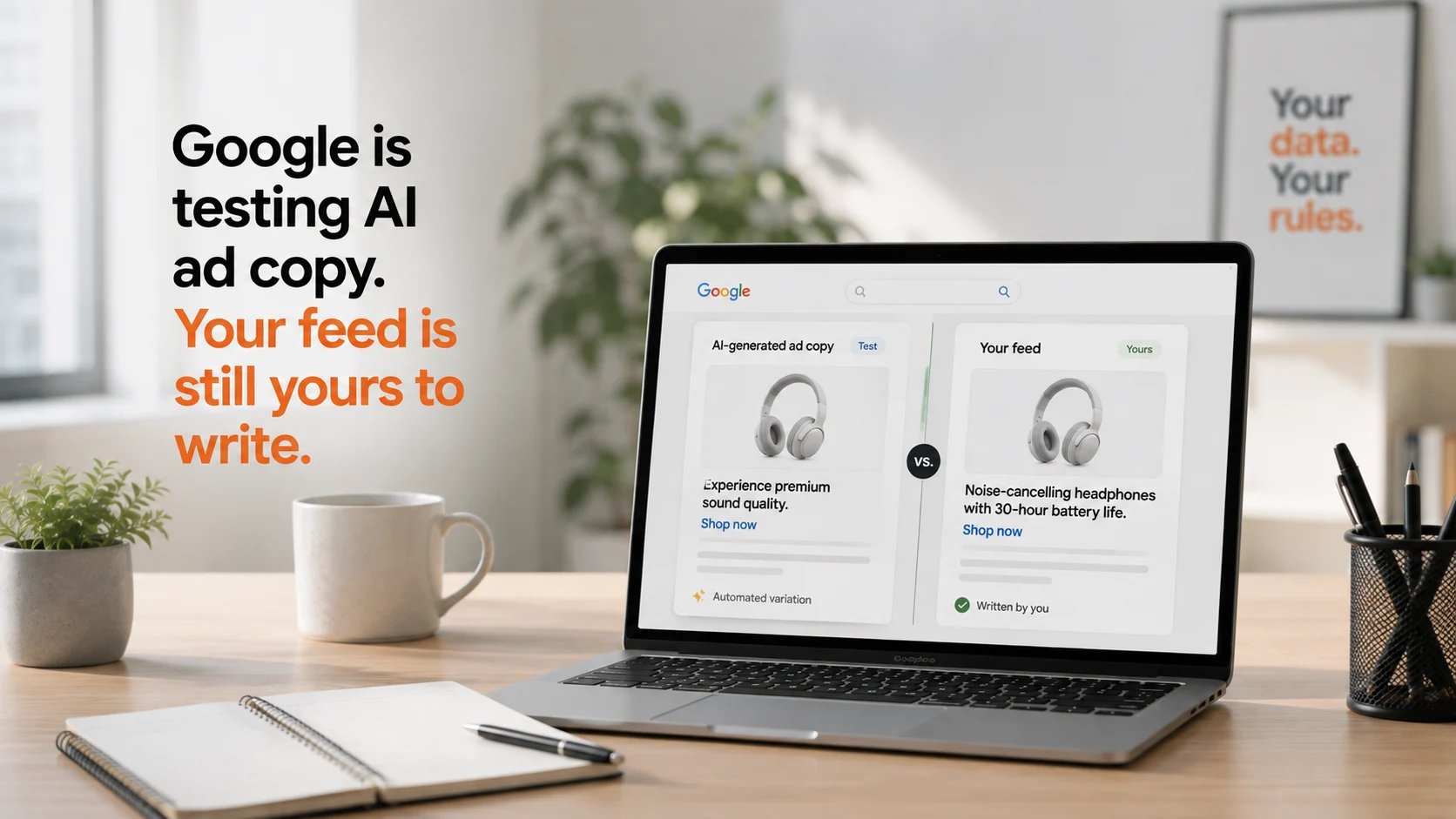
Screenshots began circulating in the last week of July 2026 showing AI written text sitting directly on top of Google Shopping and Product ads. Text the advertiser never wrote, never approved, and in most cases never saw before it went live. If you manage Shopping campaigns for a living, this is one of those updates worth reading properly rather than reacting to on social media.
Two surfaces, one mechanism, one month
On July 30, PPC commentator Brodie Clark posted screenshots showing AI generated descriptions rendering on Google Shopping and Product ad units. The sighting was picked up by Search Engine Roundtable and Search Engine Land the same day, and both outlets framed it as an extension of a test Google had already acknowledged a month earlier on standard text search ads.
That earlier test surfaced on July 1, when a marketer spotted AI generated summaries appearing beneath the description line on text search ads. Google told Search Engine Land at the time that it was a small experiment meant to see whether adding AI generated context to search ads helps people make more informed decisions. Each summary carried a small disclaimer noting the text was generated independently and could contain mistakes.
The Shopping ads sighting on July 30 uses the same visual treatment. What is missing is a fresh statement from Google naming Shopping ads specifically. Most of the coverage simply reused the July 1 quote. That distinction matters more than it sounds, so it is worth separating what is confirmed from what is inferred.
What's confirmed. What isn't.
Confirmed:
- The underlying mechanism exists, and Google has acknowledged testing it on text search ads.
- The same visual treatment has now been photographed on Shopping and Product ad units.
- Google's own interface disclaimer states that the generated text is produced independently and can contain mistakes.
Not confirmed:
- How much Shopping traffic is affected, or in which countries.
- Whether Performance Max, standard Shopping campaigns, or both carry the treatment.
- Whether the descriptions are generated live per search or cached.
- What source data feeds the generated text, your product feed, your landing page, review content, or some blend of all three.
- Whether this becomes permanent or quietly disappears the way many ad experiments do.
Treat this as a test with unconfirmed scope, not a confirmed rollout. That framing should set the pace of your response.
Copy you paid for, written by someone else
There are two separate risks worth naming. The first is performance. Shopping advertisers spend real time and budget writing and testing titles and descriptions specifically to influence click through rate and conversion. Text that appears on your paid listing without your review sits directly in that click path, and right now nobody outside Google has data on what it does to performance either way.
The second is brand and claims risk. If generated text overstates a size, a material, a certification, or in a worse case a health or safety attribute, your brand is still the one sitting next to that ad. A shopper who feels misled does not go looking for a disclaimer, they just remember the brand. This is a different situation from AI copy you deliberately turn on inside AI Max or Performance Max asset generation, where you opt in and can review what gets produced before it runs. This overlay, based on what has been reported so far, offers no visible control surface for advertisers today.
Your feed is still yours to write
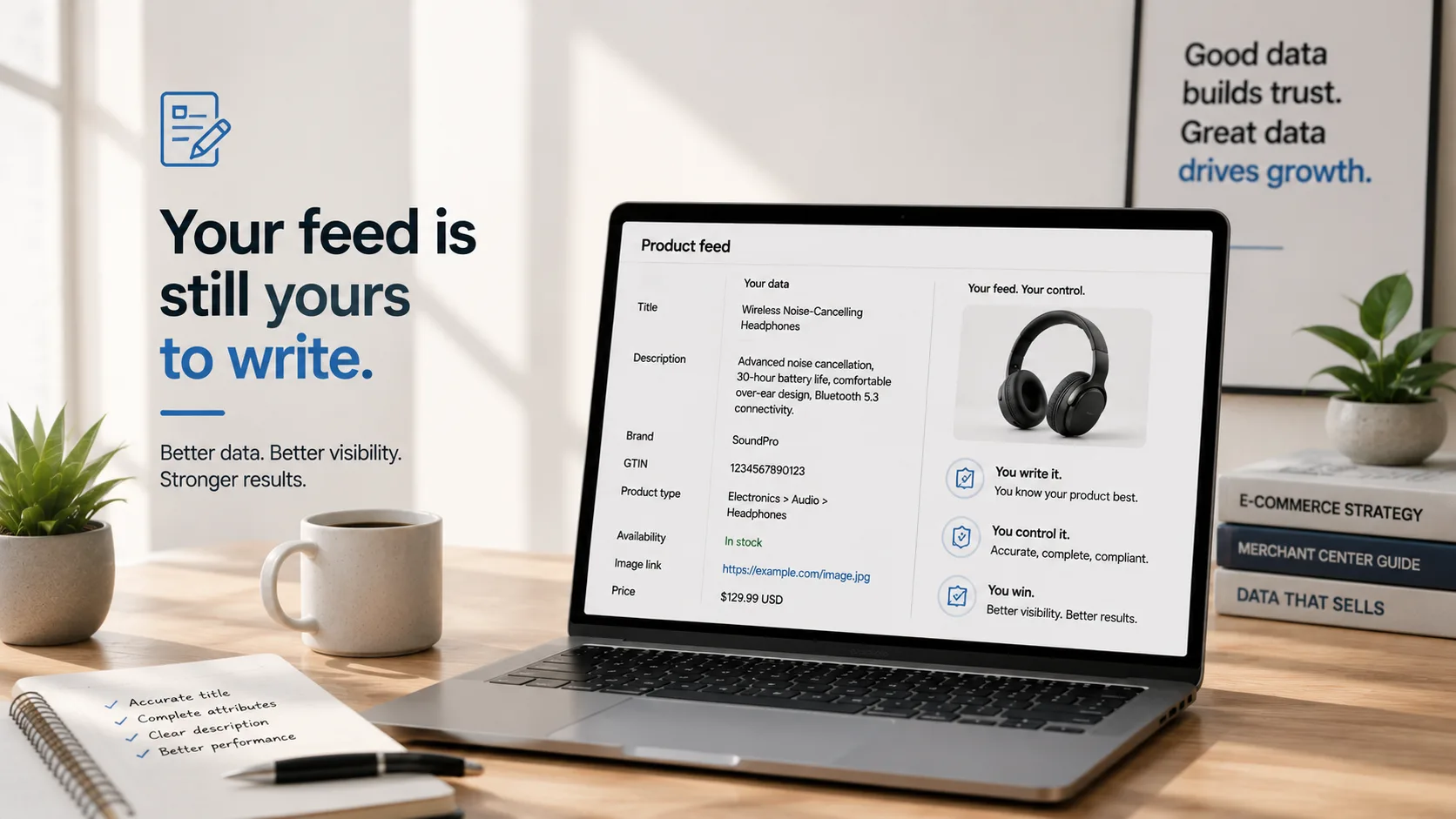
If Google's system is drawing on some mix of your product feed, your landing page, and possibly review content to generate this text, unconfirmed which, then the input you can influence directly is the quality of your Merchant Center feed. A clean, accurate, fully populated description gives any AI system, this overlay, AI Overviews, AI Mode, or a third party shopping agent, less room to invent.
Google's own specification for the description attribute is worth rereading with this in mind. The field accepts between 1 and 5000 characters as Unicode text. Because most surfaces truncate long descriptions, Google recommends leading with the most important, differentiating details in the first 160 to 500 characters. That opening span is also the text most likely to get pulled into any kind of AI generated summary. You can read the full specification directly from Google here: Merchant Center description attribute guidelines.
The specification also prohibits certain content outright, price and sale pricing, sale dates, shipping or delivery timing, your company name, ALL CAPS used for emphasis, links to your own site, and direct comparisons to competitors. Read that list again and notice something. It is almost exactly the kind of content most likely to be paraphrased into something misleading, because it is time bound, promotional, or comparative rather than plainly descriptive. A feed clean enough to pass Google's own policy also happens to be the feed that gives an AI generator the least room to misrepresent your product.
The related product_detail attribute reinforces the same discipline, structured attribute value pairs, no duplication with the description field, sentence case, checked grammar. Full details are here: Merchant Center product_detail attribute guidelines.
Four moves for this week
- Pull your top revenue SKUs and rewrite the opening 160 to 500 characters of each description so verified, differentiating specs lead, exact material, fit, dimensions, what is included in the box.
- Strip anything Google already prohibits from every description, pricing, sale dates, shipping promises, competitor mentions, company name, ALL CAPS.
- Cross check every checkable claim, sizing, materials, certifications, anything health or safety adjacent, against your actual spec sheet before it goes live.
- Search your own top products in an incognito window weekly, screenshot the Shopping results, and keep a dated record. If AI written text does appear on your listings, you want proof of exactly what it said and when.
What I'm watching across APAC

Running performance marketing across multiple APAC markets, I would add one layer to the audit above that a single market playbook will not naturally surface. Description fields translated or localized market by market are exactly where inconsistency creeps in, and inconsistency is exactly what an AI system has to interpret rather than read cleanly. If your Merchant Center feed is managed centrally but descriptions are adapted per market, this is a good moment to check that claims, certifications, and specifications stay consistent across every language variant, not just the English master feed. Category sensitive brands, personal care, health adjacent, or anything regulated market by market, have the most to lose from a generated paraphrase that does not match local claims rules.
Frequently asked questions
Did Google confirm AI generated descriptions on Shopping ads specifically?
Not directly. Google confirmed the underlying experiment on text search ads on July 1. The Shopping ads sighting on July 30 is supported by screenshot evidence and press reporting, not a fresh statement naming Shopping ads.
Can advertisers turn this off?
No opt out has been reported as of now. That sits alongside scope and permanence as one of the details Google has not yet clarified.
Is this the same as the AI copy inside Performance Max or AI Max?
No. Those are opt in tools where you can review generated assets before they run. This overlay, based on current reporting, is not something advertisers turned on or can currently review.
What is the single highest leverage thing to do this week?
Front load the first 160 to 500 characters of your description field for your top revenue products with verified, specific details. It is the span Google already tells advertisers matters most, and it is the same work that helps you on every other AI driven surface too.
The part you still get to write
This test may expand, stall, or disappear the way plenty of ad experiments do. The response that holds up either way is the same one good feed management has always required, accurate, specific, policy clean product data. That is the one part of this story you still get to write yourself.